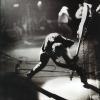
Stan Bowles – 1948-2024 Sunday, 25th Feb 2024 11:43 by Simon Dorset Stan Bowles, widely seen as QPR’s greatest ever player, passed away on Saturday aged 75. Simon Dorset pays tribute... No one man is more inextricably linked with Queens Park Rangers Football Club than Stan Bowles. Born in Collyhurst, Manchester on Christmas Eve 1948, Stan arrived at Loftus Road in September 1972 in severe danger of failing to realise his undoubted talent; when he left seven years later it was as QPR’s greatest ever player. Over 40 years since he last pulled on the blue and white hoops, he still embodied the spirit, the hopes and the dreams of the club. Stan was very much an archetypal product of his era. His resulting inability to follow rules or convention led to him being cast aside by Manchester City despite a very promising start to his career and continued to dog him on his subsequent pilgrimage through northern outposts where he left a trail of thrilled supporters and frustrated managers in his wake. Snatched by Gordon Jago from under the noses of Crystal Palace, at QPR he found a manager willing to encourage his talent and a chairman willing to turn a blind eye to his many weaknesses. In fact, in Jim Gregory, he found the perfect ally who shared his aversion to imposed authority and, in return, Gregory treated him like a favourite son.
Stan was signed to fill the gapping void left by Rodney Marsh. Undaunted by the hero status still afforded to his predecessor by huge swathes of the club’s supporters and the derision they meted out to those unfortunately enough to follow immediately in his footsteps, Stan grabbed the No 10 shirt and made it his own and, in the process, turned it into the club’s most sacred icon. He, and fellow new signings Don Givens and Dave Thomas, blended seamlessly into a nucleus of home-grown talent, brilliantly marshalled by Terry Venables, and clinched promotion to the top flight at the first time of asking with four matches to spare. Initially under Jago, and then to an even greater degree under Dave Sexton, Stan became the star in a team which was now brimming with internationals. When QPR were on Match of the Day the pubs would empty early as Rangers set new standards in style and entertainment. QPR became every football lover’s second team, Stan Bowles their favourite other player. Stories of Stan placing bets in the bookies 15 minutes before kick off with an overcoat covering his kit were aplenty, anecdotes of him soliciting horse racing results during the match from supporters with radios commonplace, pictures of him and Don Shanks, his chief accomplice, reading the Sporting Life during a match widely printed. Whether with half a mind on the 3:30 at Haddock Park or suffering from the aftermath of a late-night spiel, nothing affected his performance on the field; in a league rich with outrageously talented players, Stan was the best. In the 1975/76 season QPR played some of the finest football ever witnessed in this country. Dave Sexton’s incredibly talented squad fully embraced his quest for an anglicised version of Dutch “Total Football”. Bowles thrived on the freedom it permitted him, he appeared all over the field taunting and teasing the opposition. His immaculate ball control, teasing twists and turns and deceptive change of pace left defenders chasing shadows and his almost telepathic understanding with Gerry Francis produced some sublime one-touch moves. A delicious first-time flick through his legs to release Francis in the opening fixture against Liverpool perfectly set the tone for that spellbinding season. The following weekend his outstanding hat trick shattered reigning champions Derby County on their own ground, as Stan and Rangers announced their assault on the league title in style. The Loftus Road faithful were royally entertained as Rangers treated them to 17 victories in an unbeaten home season and, in the process, wrote themselves into QPR folklore. Stan, at times, was virtually unstoppable in an era when referees offered scant protection to skilful players. The end of that season has been exhaustively documented. Rangers lost out by a single point to a thoroughly professional Liverpool side which went on to dominate European football over the next few years; the prospect of QPR’s first venture into European competition did nothing to ease the heartbreak. Bowles, who had previously excelled playing for Carlisle in the Anglo-Italian Cup, immediately set about laying waste to European defences scoring a hat-trick in each leg of Rangers’ first round tie. Typically, the campaign ended in agonising circumstances with a penalty shoot-out defeat, but not before Stan had broken the record goals tally for a season by an individual player in an English team making a mockery of England’s reluctance to play him - he finished with just five caps, and one goal against Wales in Cardiff. Any attempt to try to describe Bowles’ impact at QPR through that or any other statistic, impressive as they are, only serves to denigrate his importance to the club, his legacy at Loftus Road transcends mere numbers. To this day, many supporters cite Stan as not only their favourite ever footballer but the reason they support the club. Despite the team proudly boasting the England captain, the Republic of Ireland’s all-time record goal scorer and the player once hailed by Don Revie as the finest young player in Europe, Stan Bowles was the main attraction.
After Dave Sexton moved on to Manchester United the sparkle at QPR faded. Stan, banished to train with the reserves, was forced out by Tommy Docherty and neither the club nor the player ever reached the same heights again. Nottingham Forest, the reigning European Champions, seemed an unlikely haven for Stan to escape to, and so it proved. Clearly his talents were worthy of the highest stage, but Forest’s manager, Brian Clough, was the embodiment of exactly the type of authoritarian that Stan has spent his life rebelling against. Despite all the bad omens, Stan’s first match for Nottingham Forest provided him with the only medal of his career. It was at the Camp Nou against Barcelona in the UEFA Super Cup. Forest had won the first leg at the City Ground 1- 0, so their 1 – 1 draw in Spain secured them the trophy. However, less than a year later, Stan’s career at Forest was over in a manner offering considerable insight into the values that Stan held dear and the principles by which he lived his life. Angry at not being selected by Clough to play in John Robertson’s end of season testimonial match, Stan refused to go to Madrid to play in what would have been the biggest match of his career, the European Cup Final. To Stan, repaying the friendship that Robertson had shown him when he first arrived in Nottingham far outweighed any personal glory. Predictably Clough didn’t see matters that way and Stan was sent swiftly on his way. A season at Orient was followed by a renaissance at Brentford whose supporters, despite his incomparable standing in QPR folklore, also welcomed him into their hearts. Such was his impact in his couple of seasons at Griffin Park that Brentford’s supporters also voted Stan as the best player in their history in a PFA poll making him, along with Sir Stanley Matthews and Alan Shearer, one of only three players to be chosen by the supporters of two different clubs. Outside of football, Stan’s irrepressible lifestyle ensured that he was never far from the headlines. Of all his vices, it was his love of gambling that offered Stan the greatest adrenaline rush, forged most of his friendships and charted his course through life. Ernie Tagg, Stan’s manager at Crewe, famously once said about him “If he could pass a bookies as well as he passes a football he’d be a rich man”. Tagg, in an attempt to stop him squandering all his money, resorted to paying Stan’s wages directly to his wife; Shelia Marson adopted a similar approach when Stan was at QPR. When one of many long-suffering landlords arrived at Stan’s digs saying “I’m here looking for the rent”, Stan replied “well come in, we can look for it together”. For all that gambling cost Stan, it did cement his relationship with the man who would ultimately prove to be the best friend he could wish for. Introduced to him by Gerry Francis just days after his arrival from Carlisle, Don Shanks immediately became Stan’s “partner-in-crime”. Briefly flatmates, Stan and “Mr Donald” habitually frequented greyhound tracks, bookies and late-night spiels together and, inevitably, got arrested together. Stan, having grown up in the midst of the Quality Street Gang in Manchester, was comfortable in the company of fringe underworld characters and thought nothing of borrowing a Transit van from one such acquaintance from his time in Carlisle. Unknown to him, it had been used in two armed robberies; unfortunately for Stan, the police were better informed regarding the history of the van. Despite their highly publicised arrest, the case was eventually thrown out but only after it had reached the Old Bailey.
Thanks to his gambling Stan was permanently broke and continually hounded QPR’s secretary, Ron Phillips, for an advance on his wages. From the first time they met, when Phillips greeted him off the train from Carlisle, to the day when Phillips drove him through a blizzard up to Nottingham seven years later, Stan was endlessly asking for a sub. Phillips’ problems intensified when QPR signed Don Shanks as the pair of them perfected a pincer style attack on his office. On one occasion, rather than try to rebuff their charm offensive to relieve him of a little more money, Phillips climbed out of the window to his office and negotiated at precarious 20-foot climb down the outside of Loftus Road into South Africa Road before beating a hasty escape. In his retirement, Stan turned to a number of different avenues to fund his favourite pastime. Amongst others, he did some coaching at Brentford under David Webb, the almost obligatory media work, wrote a betting column in the national press, joined the after dinner speaking circuit, enjoyed some hospitality work at QPR and released an autobiography. Stan didn’t ever desire to be rich, he was just trying to earn enough to while away his time at the bookies. He once said that his only regret about not playing in that European Cup Final for Nottingham Forest was that he could have sold his medal for a tidy sum.
Shortly after the news broke in June 2015 that Stan had been diagnosed with a form of Alzheimer’s QPR selected their home match against Rotherham early the following season to be in his honour. Subsequently they launched the QPR No 10 Foundation to help fund his needs along with others suffering from similar plights and then gave us a chance to say a fond farewell to the King of Loftus Road in the pre-season friendly against Bournemouth. Watched by his daughters Andria and Tracy, his son Carl and Stan’s grandchildren, he was gently steered around the pitch by the tireless Don Shanks and Gerry Francis; Stan positively revelled in the fervent adulation which welcomed him at every turn. Despite being trapped in the clutches of the most heartless of diseases, as the endless chants of “Stanley, Stanley” filled the air for one last time, he must have known how loved he was. The sad inevitability of Stan’s passing has done nothing to lessen the grief but, while we all relive our most treasured memories of him, we should spare a thought for his family who rallied around Stan magnificently, taking great care of him while the man they loved was slipping away in front of their eyes. Andria, Stan’s elder daughter, gave up her job so she could look after Stan for as long as possible. She spoke of how he retained his love of music and football the longest and how he was happiest either listening to Thin Lizzy – Stan was great friends with Phil Lynott back in the 70s – watching old matches on television or gently kicking a ball around in the garden with Macie, his great-granddaughter. It was in these happy moments that his eyes still twinkled as if he was still thrilling the Loftus Road crowd, cheering home a winner at White City or cooking up some mischief with Mr Donald. The young boy who was banned from the annual fair in his home town because he kept winning every cash prize on offer at the football sideshow may not be with us any more, nor the magician who left defenders floundering in the mud, nor the entertainer who so richly deserved the acclaim enthusiastically bestowed upon him by his legions of adoring fans. But anyone who was lucky enough to be mesmerised by his immaculate ball control, teasing twist and turns and deceptive change of pace; charmed by his easy manner, supreme confidence and mischievous smile; and thrilled by his flamboyance, flair and sheer genius, will wholeheartedly agree Stan has left an indelible impression in the history of Queens Park Rangers Football Club. His legend will live for ever. Links >>> Supporter Memories and Tributes Pictures - Action Images, Chris Guy Please report offensive, libellous or inappropriate posts by using the links provided.
You need to login in order to post your comments |
   Blogs 31 bloggersUnited by Football, Divided by Race? Swansea City’s Asian Footballers and Racism in British Football by KeithHaynes Harrison who is studying towards a media qualification has written a very interesting piece on racism in football. It’s a very clear and well documented report. Follow him on X. @HYE15h. Football is often seen as a sport with a unique power to bring people together, connecting people from all over the world with different cultures, races and religions. 128 nations have featured in the topflight of English football, including 12 Asian nations. I have seen for myself how football connects people who otherwise have little in common through my support of Swansea City. These connections are epitomised by an exchange I had with South Korean tourists during a visit to London in August 2015. My three brothers and I were wearing our Swansea shirts, which South Korean tourists recognised because the South Korean captain, Ki Sung-yueng, was playing for our team. We connected over our shared admiration for Ki before having photos together. However, despite the unity football creates, racial incidents challenge the belief that football is a game for all. Kick It Out data shows there were 1,744 reports of discrimination, a record high last season, whilst racism reports against South Asians increased by 100%. This season we’ve already seen racial abuse allegedly directed at Swansea City’s Ji-Sung Eom during a game against Millwall. Former Swansea British Asian player Yan Dhanda was also subjected to racist messages online in 2021. Ki’s experience of racist chanting in Scotland in 2010 before joining Swansea shows that racism against Asians in British football is not a new phenomenon. In light of these incidents I will analyse the impacts of racial abuse against Asian players and football more widely, and ask if enough is being done to stop it. There are a multitude of different impacts from racial abuse within football, most notably the damage to player welfare. Yan Dhanda talked about the hurt he felt in the aftermath of his attack, stating how it affected both his family and how he was in training. Research by Osinnowo Kolawole reveals how the long-term emotional damage of racism is often unseen, affecting both personal lives and their performance. Racism can also lead players to question whether they want to continue playing football, as seen with Danny Rose. Osinnowo further states how racial trauma can lead to deep internal conflicts, with players altering their appearances to conform to white norms in football. For Lee Chun-Soo a former South Korean international footballer racist abuse left him with a desire to build a larger physique as a way of preventing further abuse. He believes the racial stereotypes about Asian players being small and weak results in a reluctance to recognise Asian players as equal competitors. This provides an example of an Asian player having to change who he is to be accepted into the sport, Lee and other victims of racism state how it can lead them to question their sense of belonging in the game. Premier League video content creator Kevin Yuan often faces racist abuse when filming at UK stadiums, despite living in the UK and following football since 2008, he states how he “feels like a foreigner, like I don’t fit in”. This challenge to a player’s sense of not belonging within the game has also had a severe impact on Asian participation with football in Britain, with just over 1% of professional players being of South Asian heritage. Whilst there are many factors which underpin this underrepresentation, racial abuse definitely plays a role. Research by Dr Stefan Lawrence reveals that overt racism within football academies from other players, makes British Asians feel like outsiders. Yan Dhanda talks about how during his time in football academies he was always told he wouldn’t make it due to his Asian background. For other Asian players lacking self-belief and support, abuse can prevent progression. Separate Asian teams and leagues have emerged in direct response to racism; these are seen as safe spaces for Asian players. Dr Lawrence has found that these separate teams and leagues do not have the same level of exposure as mainstream leagues, whereby they aren’t seen by scouts as repositories of talent. Furthermore, the lack of professional Asian players as role models not only limits young Asian players’ beliefs, but also limits coaches’ and scouts’ beliefs in what Asian players they are assessing could become. Seeing the few professional Asian players subjected to racial abuse risks discouraging the next generation from pursuing football. To combat racism in British football, a range of initiatives have been implemented by the leagues, clubs and organisations such as Kick It Out and Show Racism The Red Card. Whilst reports of racism are at a record high, this doesn’t necessarily mean that there is greater racism within football. More reports against racist abuse suggest people are more willing to report racist abuse when they see it, standing up to racism. Since 2022, Kick It Out has run fan education programmes for 500 fans referred by clubs or police, with a reoffending rate of just 1.25%. This shows the impact education can have in tackling racism. However, with 792 reports of racism in 25/26 season alone, many more of these programmes are needed to cover all the perpetrators of racist abuse. An increase of reporting by the media in highlighting racism within football can also be seen. For example, Sky Sports’ “Football’s Hidden Talent” series highlights the racism and inequality South Asians face in football. The racist incident against Ki in 2010 only making the local newspaper, compared to the nationwide and international coverage of the racial abuse against Eom, shows the heightened media coverage of racism in football. Whilst attitudes towards tackling racism have seemingly improved, there are still drawbacks. On-pitch protocols in dealing with racist abuse which were followed during the incident with Eom led to a 7-minute break in play, which afterwards was criticised by the Millwall manager for “killing the momentum”. Such comments were heavily criticised within the game for prioritising momentum over player welfare. An increasing number of Asian players in British football has coincided with Asians taking up a greater share of racism victims. Whilst more people are willing to report racism within the game, this has only revealed the great scale to which racism remains deep rooted in the game. In addressing this problem, harsher sanctions against perpetrators are needed. Cracking down on racism is crucial in addressing the underrepresentation of Asian players in professional football. The lived experiences of Asians in British football expose inequalities in who feels they belong within football. Football should be a game for all, with everyone equally included, whilst it connects so many, in its current state too many are left out. Swansea City has been at the forefront of taking action against racism within football. It was the first club to stage a social media boycott in April 2021 after abuse against Yan Dhanda, Ben Cabango and Jamal Lowe. A second boycott, which Swansea City participated in later that month involved other clubs and sports organisations across the world, representing a combined following of 1.7billion. Swansea City’s resolute actions against racism are reflective of one of the club’s strategic pillars ‘Cymdeithas’, which places the community, togetherness, and belonging at the heart of the club’s identity. It is an ethos that extends beyond the football pitch reflecting the importance of creating an environment in which everyone feels welcome and valued. The unwavering support shown towards Eom by the Jack Army in the aftermath of the alleged racist abuse he experienced, provides an illustration of these values in practice. Ultimately this piece has sought to highlight the very real and immediate impact that racial abuse can have on footballers, and why such behaviour cannot simply be dismissed, ignored, or accepted as part of the game. Eom Ji-sung’s experience is not an isolated incident, but forms part of a wider history of racial discrimination experienced by Asian players within football, including those who have represented Swansea City. While the club’s response and the unwavering support shown by supporters towards Eom provide encouraging examples of what football can represent at its best, there remains much work to be done in the fight against racism. My best wishes go to Eom, with the hope that the support of Swansea City and the Jack Army remains far louder than the abuse he has faced. Bibliography Premier League, 13 September 2025, https://www.premierleague.com/ Sky Sports, 31 July 2025, https://www.skysports.com/foot Andrew Raeburn, BBC Sport, 14 October 2026 https://www.bbc.co.uk/sport/fo BBC Sport, 11 February 2021, https://www.bbc.co.uk/sport/fo The Courier, 2 November 2010 https://www.thecourier.co.uk/s Swansea City AFC, 18 February 2021, Swansea City AFC, 8 April 2021, https://www.swanseacity.com/ne Swansea City AFC, 13 May 2021, https://www.swanseacity.com/ne Osinnowo, Kolawole, 2024, Exploring the Experiences of Racial Trauma among Footballers. https://uhra.herts.ac.uk/id/ep BBC Sport, 4 April 2019 https://www.bbc.co.uk/sport/fo Lee Chun-Soo, 23 October 2026, Nizaar Kinsella, BBC Sport, 20 November 2024, https://www.bbc.co.uk/sport/fo Kick It Out, 30 September 2026, https://www.kickitout.org/site COPA90, 24 January 2019, Gareth Vincent, BBC Sport, 12 November 2020, https://www.bbc.co.uk/sport/fo Sky Sports News, 25 May 2024, Sky sports, 31 July 2026, https://www.skysports.com/foot Kick It Out, 30 September 2026, https://www.kickitout.org/site Sky Sports News, 25 May 2024, Leeds United Polls[ Vote here ] |
 By continuing to use the site, you agree to our use of cookies and to abide by our Terms and Conditions.
We in turn value your personal details in accordance with our Privacy Policy.